Showing posts with label antique rosary. Show all posts

Wednesday, February 8, 2012

A Celebration of Beautiful Red Rosaries

I thought this month would be a fine time to share the great variety of beautiful red beads used in antique rosaries. Many Victorian aged rosaries have the deep red glass beads made to resemble garnets, while others of this time are accented with gorgeous and rare natural Mediterranean coral that has a more salmon tone. There are even antique beads composed of a man-made material called bois durci that used sawdust and various other materials. The story goes that the reddish color of these beads is from the addition of blood as a binder.


Although at Valentine's Day and other times throughout the year, red symbolizes love, it can also symbolize blood and even war. This is not the case with rosaries, though, as red rosaries were produced primarily for aesthetic purposes- some people prefer colored beads rather than wood beads. There are rare chaplets where the color red symbolizes the blood of Christ- such as the The Precious Blood chaplet.


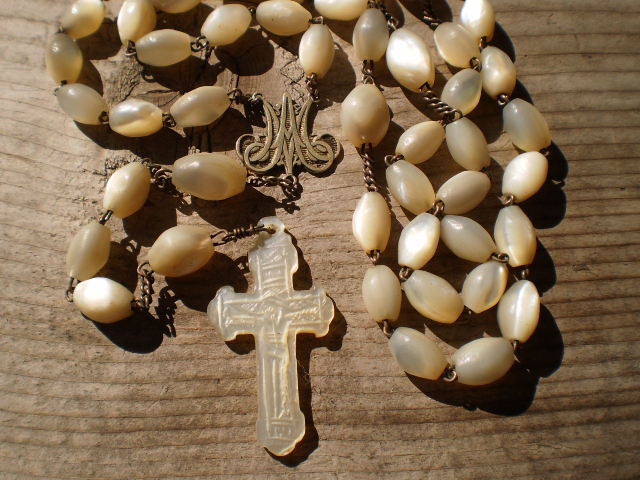
Enjoy these stunning red antique rosaries in a variety of materials- all found on The Sacred Bead. I also added some lovely Mother of Pearl rosaries to provide a contrast to the red. The incredible way that MOP catches the light is a wonder for the eyes.

 Extremely rare carnelian beads with sterling- antique French rosary from the mid-1800s.
 Beautiful rosary from Lourdes France with faceted red glass beads.
 Victorian Era Red Glass Rosary.
 Precious Mediterranean natural sea coral and mother of pearl rosary. Coral was believed to have protective qualities and was extremely popular during the Victorian period.
 1800s rosary with bois durci beads.
 A fabulous 1800s very large Mother of Pearl Rosary with MOP and silver crucifix.
 Mother of Pearl with a warmer tone- beautiful hand cut beads and a delicate fleur de lis crucifix
 Lovely garnet colored glass beads on a sweet, antique rosary.
 Mother of Pearl Cross- quite rare!
Fabulous garnet colored cut glass with incredibly detailed sterling crucifix and center- a stunning rosary from the 1800s.
 Beautiful French antique rosary with natural coral beads.
 These are deep red glass Prosser beads- an inventive new type of bead made in a mold and used extensively as trade beads.
 Gorgeous strung Bavarian rosary with opaque glass beads that resemble coral.
 Sweet 1800s hand cut mother of pearl rosary with MOP center and cross.
Very unusual bright red 1800s antique rosary with Prosser beads and the original old brass case. Could have accompanied pioneers as they headed west.

Sunday, October 9, 2011

Plenty of Moderately Priced Antique Rosaries on The Sacred Bead

As the Holiday Season approaches, many people are starting their search for just the right Christmas gifts. Antique and vintage rosaries make a fantastic gift for those who appreciate the exquisite craftsmanship and the beauty of rosaries that have been lovingly prayed on for decades. 
With the economy as it is, I have been concentrating on bringing many more moderately priced rosaries to The Sacred Bead. You'll still find some incredible and rare rosaries, but also plenty to fit any budget! Here is just a sampling of the most recent additions to The Sacred Bead. Don't forget that buying an antique or vintage rosary is an ecologically sound choice. These rosaries already exist- you are saving energy and resources every time you purchase and antique or vintage item rather than a new one.

 Lovely Faceted Crystal and Deep Blue Enamel Antique French Rosary. Antiques page 4
 Fabulous Amethyst Crystal (glass that resembles amethyst) with Extra Medals Antiques page 20
 Rare Handmade French Nun's Rosary from Quebec Antiques page 15
 Incredible Italian Art Glass Rosary Antiques page 7
 Lovely Antique French Rosary with Deep Garnet Glass Beads   Antiques page 25
 Art Deco Mother of Pearl Rosary with White Enamel Accents  Antiques page 33
 Antique French Rosary with Art Glass Beads and Extra Medals  Antiques p 20
 Beautiful Victorian Metal Rosary w Highly Detailed Crucifix Antiques page 21
Antique Rosary with Crystal Beads and Fancy Spacers   Antiques page 10

Wednesday, July 6, 2011

Antique and Vintage Rosaries With Spina Christi Beads- Are They Real or Plastic?

 Here are two vintage rosaries made of spina Christi beads, the seeds from a thorny plant said to be what Christ's Crown of Thorns was made of. Most information points to these beads being from the Zizyphus spina-christi plant, native to the Middle East. But, one rosary is made from the actual seeds, while the other is made of plastic beads produced to resemble spina Christi beads. Can you tell which is which?


 The beads on the left are real, while the ones on the right are plastic. The biggest clue is the uniformity of the shape of the plastic beads. Looking closely (but not shown in the pictures), you can see a little line from the mold that the beads were formed in running along the outside of each bead. Compare the variations in color in the beads on the left, the richer shine and the difference in shapes. The holes in plastic beads will always be right at the top and bottom of the beads, whereas the holes in the actual seeds may be a little off center.
Another clue is the plastic beads will lay perfectly flat. The variations in the size and shape of the real beads generally prevent them from all laying flat.
 Here they are jumbled together- can you see the difference now?


Another clue might be the age of the rosary based on materials. The center of the real seed rosary is an old Art Deco style and you can see the brass beneath the silver plating. The center on the right is made of some kind of white metal, possibly pewter, commonly used in the last half of the 20th century. Although, dating a rosary does not guarantee it has authentic spina Christi beads, generally, the older the rosary, the more likely the seeds will be real.
Hopefully, this will help you in your rosary collecting. Remember, there really is nothing wrong with plastic, although, I must admit, I have a real aversion to it!
Find a wonderful selection of antique and vintage rosaries on The Sacred Bead. I am always very careful with describing rosaries, their age and what they are made of. If I don't know or am not sure, I'll always state that.

Friday, March 25, 2011

Time for Another Warning About Rosaries with Added Skulls on eBay

I know I've already posted about the several sellers on eBay who have added modern carved ox bone skulls made in China to vintage and antique rosaries AND not been honest about saying they are modern additions, but after searching rosary + skull on eBay tonight I see the trend seems to be expanding. Before you ever buy an antique or vintage rosary with an attached skull, look at the seller's other items. If you see rosary after rosary with little skulls hanging off of them, all looking very much like the little skulls that are from modern Buddhist malas or ones found in online bead stores, then you should question the seller about the time period that the skull was added to the rosary. I've actually asked several sellers, receiving no reply from one and an admission from another that yes, she adds them. Unfortunately, without asking, you probably won't be told this in the auction.
None of this wouldn't matter IF people knew that the skull is not original to the rosary. Adding a skull bead that cost mere pennies does not increase the value of a rosary by a hundred or more dollars. Bidding is fierce on some of these rosaries and it really disturbs me that people are paying their hard earned money for something that is not authentic.
I make new rosaries using skull beads, so I am quite familiar with them. I also have quite a few rosaries with authentic antique skulls attached in my private collection. There is an enormous difference between the two. You can see my prior post from November, 2010 for pictures of authentic skull beads and how they are attached to the rosary- they are not dangling from them!
I am also seeing a trend in attaching a small, deep red tear drop shaped bead and selling these as antique rosaries with a drop of blood bead. Again, if you see the same dealer with numerous rosaries with the same bead, attached in the same way, it is a good clue that it is a recent addition.
When you have a favorite rosary, you can add whatever you like to it to help with meditative prayer. It is selling the rosary without informing the buyer that it is a modern addition that seems less than honest.

Tuesday, November 23, 2010

Antique Strung Rosaries

Although unfamiliar to the eyes of rosary users in the United States, antique strung rosaries are common in Europe and descended from the earliest of rosaries. Wiring a rosary didn't come into fashion until the 1700s so in the vast history of prayer beads, it is a rather modern development! The common 5decade rosary is frequently found strung in France, Belgium and Germany, but the most famous of the strung rosaries are the 5 and 6 decade rosaries from Bavaria with their gorgeous antique filigree silver crosses and Pater beads. Note the second cross above the main cross- this is the Credo Cross. Some of the main crosses have enamel on copper inserts, the oldest of these have wood and mother of pearl crosses in the center of the silver filigree. Because of the amount of use these rosaries got, the string would often break and need to be replaced. Sometimes beads were lost and replaced over the decades. This is just part of them being authentic antique rosaries.These are truly collector rosaries, yet are still produced in Bavaria and are exceptional in their beauty.
Fifteen decade antique strung rosaries can be found in France, often with wood or bone beads.


 This is a beautiful example of an antique Bavarian rosary. Several beads have been replace on this one and the string may be from the mid-1900s, but the rosary originated in the 1800s. This one is a six decade rosary, quite common with Bavarian Rosaries. Find original antique Bavarian rosaries at The Sacred Bead.
 Beautiful silver and enamel work highlight the main cross. Note the smaller Credo Cross.


 This is a simpler antique Bavarian rosary without the enameled inset in the cross.
 From the 1800s, this full 15 decade antique French rosary has bone beads and bone cross with a brass corpus. Lovely antique rosary, still intact after more than a century!


Sweet little Belgian strung rosary. I believe the beads on this one and the cross are celluloid or similar early man-made material. I just love the little bow that has been tied there for decades. Currently, this is the featured rosary on The Sacred Bead.

Tuesday, November 16, 2010

A Magnificent Givre Bead and Sterling Rosary


Without a doubt, this is one of the most fabulous rosaries I've had. Note the hand cut givre beads with a black core and clear outer layer. I believe these are Murano glass beads, made on the famous glass-making island of Murano Italy, renowned for its centuries of bead making. Along with the incredible beads, this large rosary has all sterling metal parts. Especially gorgeous is the large detailed crucifix and the lovely spacers on either side of the Pater beads. Each exquisite spacer is detailed with a rose and leaves. This is an exceptional antique rosary, beautiful and finely crafted. It would make a spectacular gift, to be treasured for a lifetime. This lovely rosary is from France, where some of the world's finest rosaries have been produced.


I never clean or polish rosaries, you will see that the silver has an antique patina. The new owner may polish or not depending on their tastes.
See this and all my other fine antique rosaries on The Sacred Bead, the largest source for antique, vintage, and designer rosaries on the internet!

Monday, November 1, 2010

Antique WWI and WWII Rosaries for Soldiers


 Note that all the centers on the Antique WWI rosaries are the same. Each one has a profile of Mary on one side and Jesus carrying the cross on the reverse. Every single one of the rosaries has this center. The crucifix is entirely another story. They vary greatly, from wood crucifixes to simple brass ones.


Accurate histories of rosary types are very difficult to come by- there are few with general knowledge on this topic, as rosaries have only recently become collector items. Prior to modern times they were solely devotional objects, and these soldier's rosaries exemplify that. These were official issue rosaries during WWI. The story goes that so many were produced there were plenty remaining up until WWII. Made to be durable, they are constructed of "pull chain" designed metal balls. Nearly indestructible, they were carried by our soldiers to battle.


Because of their extreme durability, they make wonderful rosaries for daily use. I have seen similar versions coming from nun's estates. Perhaps they were given to an aunt or sister who was a nun by returning soldiers, or maybe some were intentionally made for convent use.


Currently, I have one that has an old field repair on The Sacred Bead. This one is very special, as it must have quite a story to tell. It needs to go to a WWI history buff or someone who appreciates the endurance and devotion that rosaries have had. They are not all shiny and new! Many of the antique rosaries on my website have had over a century of loving use and repairs. But, that is the only WWI rosary I have ever seen with a repair, testifying to their extreme durability.


Most of these rosaries are solid brass. A few have silver plating, these are said to be the ones reserved for the chaplains. Some are worn through the plating, again testifying to their endurance. With constant handling, the old patina on the brass is gently worn away and they begin to glow again. I never clean rosaries, leaving that to the new owner. Some like the original patina, others like a polished look. These are absolutely gorgeous when polished. Although I have seen some sellers claiming the silvered ones to be sterling, none are marked sterling and they were made after the laws went into affect that silver and gold must be marked. I doubt that there are any that are sterling, so beware of sellers claiming that one is solid silver. Testing silver only reveals the surface material so silver plate will test the same as solid silver unless a file mark is made through the plating- which of course, ruins the rosary.